
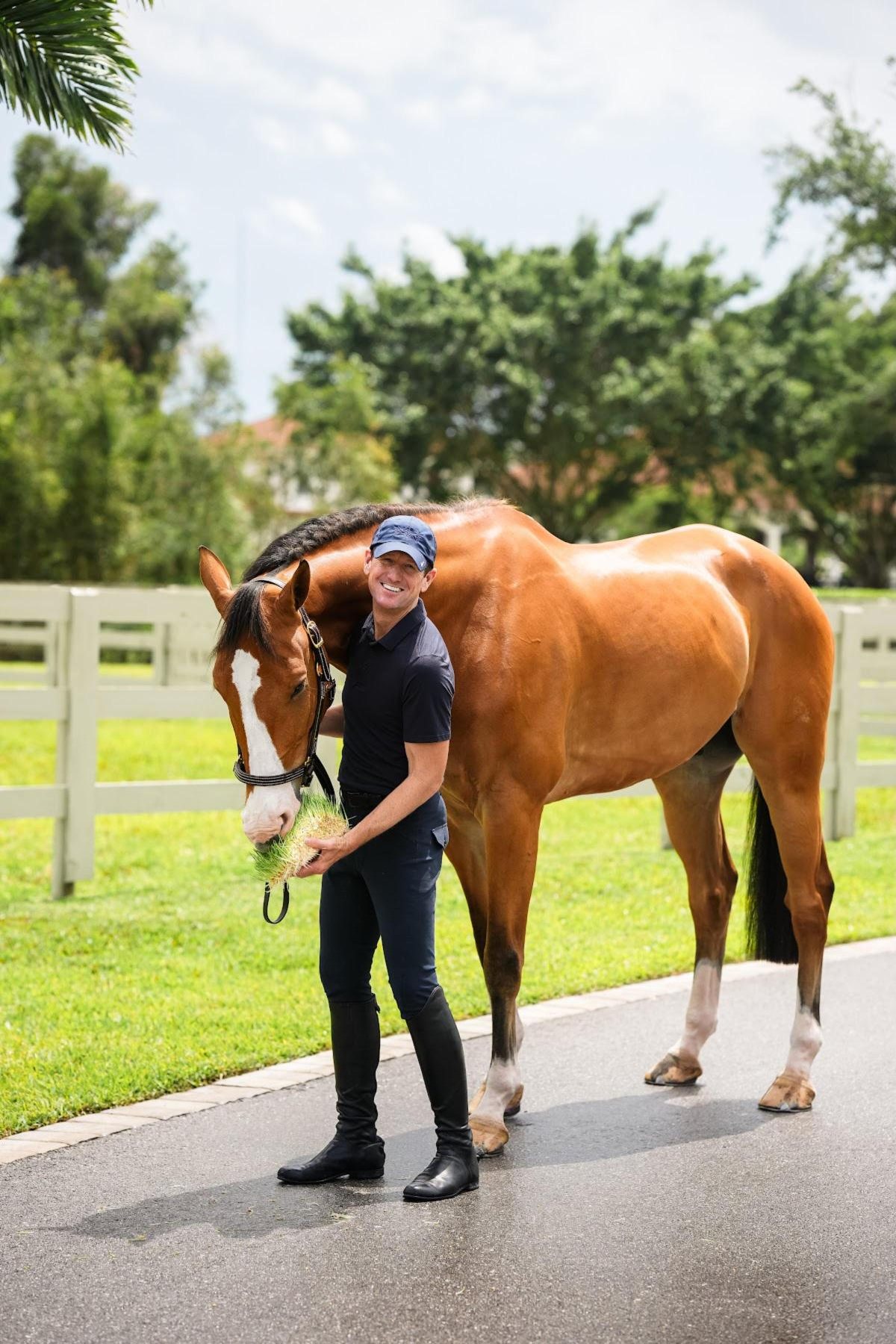
Sprouted Barley Grass
The fresh, living green that Olympic show jumpers feed their horses. Grown in Wellington, Florida, and delivered to your barn every day.
3 lbs per horse, delivered 6 days a week.
- Healthier digestion and a happier stomach
- Shine, dapples and condition you can see
- Faster recovery after training and shows
- A calmer, more settled horse
- Fresh, live, non-GMO, zero chemicals
Fed in the barns of
McLain Ward · Ashlee Bond · Daniel Bluman · Nicki Shahinian-Simpson · Ansgar Holtgers Jr.
“All of the horses in our program eating Equi Greens have flourished and look amazing.”Nicki Shahinian-Simpson, Professional Show Jumper
Why McLain Ward feeds Equi Greens
“It's definitely improved our horses' overall health, and they are so excited to have it that they go for it more aggressively than the carrots.”
McLain Ward, Olympic Medalist
Show horses weren't built for show life
Horses evolved to graze for most of the day, and their stomachs produce acid around the clock, even when they aren't eating. Performance horses live a very different life: stalls, scheduled meals, grain, shipping and long days at the show.
That gap shows. Kentucky Equine Research reports gastric ulcers in roughly 60% of show horses and more than 90% of racehorses. One of a horse's best natural defenses is chewing forage, which produces the saliva that buffers stomach acid. In one study, hay and fresh grass produced about twice as much saliva as a grain meal.
Your horse's program is built for performance. Equi Greens gives back the one thing show life takes away: fresh grass, every single day.
Real food. Visible results.
Better digestion
Live enzymes and fiber help your horse get more from every meal.
A happier stomach
Fresh forage between meals keeps the gut working the way it should.
Coat you can see
Vitamins, minerals and amino acids that show up as shine and dapples.
Stronger recovery
Helps hard-working horses bounce back after long show days.
A calmer mind
Horses are built to graze. Fresh greens help them settle.
Hydration in the heat
Fresh grass is mostly water, so every bite helps keep your horse hydrated.
One of nature's most nutrient-dense greens
Young barley grass delivers vitamins, minerals and plant compounds in their natural, whole-food form, the way horses evolved to get them.
Vitamins
- Vitamin A (as beta-carotene): vision, immune function and healthy skin
- Vitamin E: a key antioxidant for hard-working muscles and the immune system
- Vitamin C: antioxidant support
- Vitamin K: healthy bones and normal blood clotting
- B vitamins (B1, B2, B3, B5, B6, folate): turning feed into energy
Minerals
- Calcium & phosphorus: strong bones
- Potassium, magnesium & sodium: electrolytes for muscle and nerve function, lost in sweat
- Iron: healthy red blood cells that carry oxygen
- Zinc, copper & manganese: hoof, coat and immune health
Plant power
- Chlorophyll: the green pigment of fresh grass
- Antioxidants: flavonoids, polyphenols and the enzyme superoxide dismutase (SOD)
- Live enzymes from a growing plant
- Amino acids: the building blocks of muscle and topline
- Natural fiber for a healthy gut
Real food, not a powder
Most supplements deliver nutrients as powders, pellets or pastes, often in synthetic forms. Fresh barley grass delivers them in living green forage, together with the fiber, moisture and plant compounds a horse's digestive system is built to process.
Fresh green grass is the natural source of these nutrients. Equi Greens is grown fresh and delivered to your barn daily, so your horse eats it long before time and storage can take their toll. And with fresh fodder at roughly 80 to 85% water, every bite also helps keep your horse hydrated.
Equi Greens has been a staple in my barn for years. I've had the horses on the grass since we were in Cali and we can't live without it! The horses' coats have never been better and we have a lot less gastro issues + no colics in years, thank God!
The grass has improved our horses by at least 20%. The farrier said Donnie's feet have improved significantly. Your grass really works.
Simple to add to any program
Equi Greens is a daily addition to your existing program, not a replacement for it: 3 lbs per horse, 6 days a week, fed fresh alongside your hay and concentrate. Equine nutritionists agree fodder works best as a complement to a balanced diet. Introduce it over a few days like any feed change, and keep your vet or nutritionist in the loop on the full ration.
Horses with metabolic conditions: young sprouts can contain sugar and starch levels similar to spring pasture. If your horse has insulin resistance, EMS, PSSM or another condition that calls for a low-sugar, low-starch diet, check with your vet before adding any fresh grass.
Why not grow it yourself?
You could, but it's a full-time job. Fodder trays need watering several times a day and constant cleaning to prevent mold, with a new batch started every single day of the year. And fresh fodder doesn't keep, so you can't stock up at the feed store.
We do all of that for you in Wellington and deliver it fresh to your barn 6 days a week. Your horses get the benefits. Your team doesn't get another chore.
See it in your own barn
Pick the horses you think need it most. We'll deliver fresh grass for 6 days, completely free. Then decide.
Now serving Wellington and South Florida · $349/month after your trial
Sources
- Feeding Sprouted Grains to Horses, Kentucky Equine Research
- Forage Buffering Capacity Relevant in Gastric Ulcer Prevention, Kentucky Equine Research
- Hydroponic Fodder for Horses: The Benefits and Drawbacks, The Horse
- Nutrition Loss in Stored Hay, The Horse
- Choose Natural Vitamin E for Horses, Kentucky Equine Research
- Barley Grass: Benefits, Uses and Side Effects, Healthline
- Health Benefits of Barley Grass, WebMD
This page is general information, not veterinary advice. Talk to your veterinarian about your horse's individual needs.